Currently Open to Applications 26-27
The Poetry School MA in Writing Poetry is a taught programme delivered at our London teaching hub, Somerset House. The MA is firmly rooted in the publishing, performing and promoting poetry world with established poets, including Glyn Maxwell and Fran Lock in London. There will also be guest tutors from the Poetry School’s teaching community and from Newcastle University, whose faculty includes Jacob Polley and Sinéad Morrissey.
The MA in Writing Poetry is a degree accredited by Newcastle University and delivered in London as a part-time course over two years. Each year, students come together with Newcastle students to participate in a one week Summer School, alternating locations between the two cities.
Course Outline
Year One
6 Poetry Masterclasses (including guest tutor session)
4 Poetry Workshops
Summer School Sessions
Year Two
6 Poetry Masterclasses (including guest tutor session)
Poetry Workshops
Summer School Sessions
Final Portfolio
Tutors
Glyn Maxwell
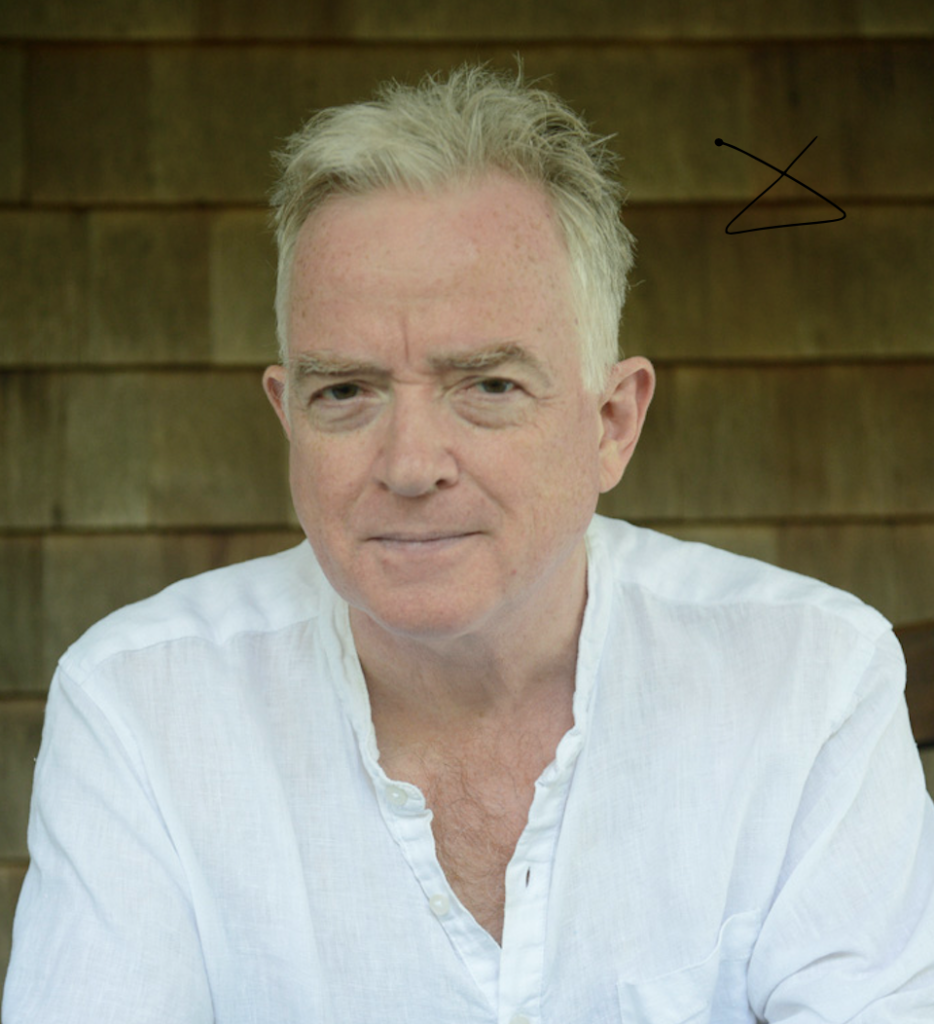
Glyn Maxwell is a poet, playwright, librettist, critic and teacher from Hertfordshire, England. He lived and taught in the USA between 1996 and 2006. His poetry books include How The Hell Are You (2020), Pluto (2013), Hide Now (2008) and The Breakage (1999), all of which were shortlisted for the T. S. Eliot or Forward Prizes. Next year he will publish Extinction Songs, poems for the world’s most endangered creatures; his New and Selected Poems appeared last year. His popular critical guidebook On Poetry (2012) and its comic sequel Drinks With Dead Poets (2016) set out his poetic philosophy, which continues to evolve on his Substack site Silly Games To Save The World (2023-). He taught at Princeton, Columbia, Amherst and NYU in America, at Warwick, Essex and RADA in England. Glyn has recently taken courses in psychology and in art therapy, and had a yearlong mental health placement in the NHS. He is currently writing a book about recent developments in neuroscience and their implications for poetry, politics and psychology. Along with his poetry readings, he has recently lectured in Writing and the Unconscious at the Institute of Psychoanalysis, and on W. H. Auden at the Freud Museum.
Tutor
Fran Lock
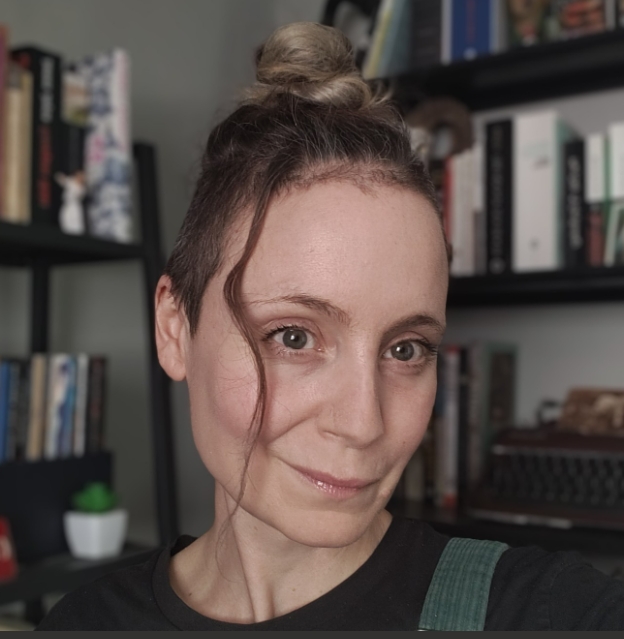
Dr Fran Lock is a poet, essayist, editor, amateur medievalist, and rescue-dog parent. She is the author of numerous chapbooks and sixteen poetry collections, most notably Hyena! (Poetry Bus Press, 2023), shortlisted for the T.S. Eliot Prize 2023 and for the PEN Heaney Prize 2024. Her most recent pamphlets are Love is Stronger than Death (Culture Matters, 2025), and Hag Stone (Dare-Gale Press, 2025). Vulgar Errors/ Feral Subjects, a collection of lyric essays exploring feral subjectivity through the lens of the medieval bestiary, was published by Out-Spoken Press in 2024. Fran was the Judith E. Wilson Poetry Fellow at Cambridge University 2022-2023, and is a Commissioning Editor at the radical arts and culture cooperative Culture Matters. She describes her work as prolific, versatile, and driven by a profound commitment to small-press publication.
Tutor
Course Information

Poetry Masterclasses
Poetry Masterclasses consist of self-contained seminars constituted of a mixture of exercise and discussion-based learning and delivered by both core and guest tutors, plus tutorial and drop-in sessions to discuss progress and to prepare for submission. Students are required to engage with the topic of each seminar through practical work and direct discussion. Students will strengthen their knowledge of a range of forms, techniques and thematic concerns present in contemporary poetry and of a variety of perspectives from which these can be approached. They will develop the confidence to experiment with their own work and to produce considered and disciplined revision of their poems. They will also learn to provide practical criticism of others’ work and to receive and utilise constructive criticism of their own work.

Poetry Workshop
In Poetry Workshops, students will develop their knowledge of a range of literary forms and techniques, an awareness of the contemporary poetic landscape in which they are intervening, and the inheritances on which they might draw as poets. They will also gain knowledge of how, critically and constructively, to address issues within their own and other peoples’ writing. Within the group workshops, students will become familiar with poetic forms, schools and styles both within the context of US and UK poetry, and with issues of contemporary poetry and the tradition, through prescribed reading and critical discussion. The two individual tutorials will offer the chance for intensive critical discussion of students’ work, coupled with tailored guidance on further reading and the development of their writing practice. The file of work enables writers to consolidate their work in the light of all comments received; the commentary on process encourages responsible critical insight into the processes of revision, theme and influence.

Summer School
Summer School offers an intensive opportunity for students to further develop their craft and also gain insight into professional options for their poetry careers. Through a week of sessions with renowned poets and publishers, extended explorative sessions with core tutors and social events designed to create a network between cohorts, Summer School is a space in which the students can immerse themselves in their own work and further progress their academic development. Previous London guest tutors include Caroline Bird, Anthony Joseph, Joelle Taylor, Rupert Sheldrake and Caleb Femi. Previous Newcastle tutors include Karen McCarthy-Woolf, Don Paterson, Jacob Polley, Sinead Morrissey and Tara Bergin.
Summer Schools are an important — and very exciting — part of the MA in Writing Poetry. The costs associated with attending Summer Schools (including travel and accommodation) are to be covered by the student.

Annual Submission
Summer Schools are an important part of the MA in Writing Poetry, and students tell us that they are two of the most exciting and inspiring modules of the programme.
However — in exceptional cases, and with the permission of the Degree Programme Director — a student may be able to complete the Annual Submission, a module which is offered in lieu of a student’s participation in Summer School. This module will consist of a semester of independent study, plus three one-hour tutorials.
Final Submission
Students will prepare a file of work consisting of around 30 pages of poetry, and will show through the file a finally shaped work or body of work along with a reflection on the processes of the work. This module will consist of individual supervision followed by independent study. Each student must consult the module leaders with an initial proposal, submitting an opening plan/draft for comment and discussion.
We are currently accepting applications for the Academic Year 26-27 (start date September 2026)
How to apply
For more information on fees and entry requirements, please visit the Newcastle University webpage.
For further enquiries, please email Tessa Foley at ma@poetryschool.com for study in London, or Scott Burdon at scott.burdon@ncl.ac.uk for study in Newcastle.
A full fee scholarship has historically been available for outstanding applicants (or two 50% scholarships where there are two equally outstanding applicants). Please note that this has now been awarded for academic year 2026-27.
Please look out for information on future scholarships to this course in our upcoming newsletters and on Poetry School social media.