In an increasingly-cynical world, how can we authentically engage with the nonhuman in our writing, and bring poetics into our activism, field work, and rituals?
“Where we start to move forward is when we learn to ask questions which are less concerned with ‘Are you like us?’, and more interested in ‘What is it like to be you?”
– James Bridle, Ways of Being: Animals, Plants, Machines: The Search for a Planetary Intelligence
We’ve heard the jokes: nice poem about a chaffinch: must be eco-poetry; I would write an ecopoem, but I’m just not that interested in mossy rocks. In a world where we’re all becoming increasingly cynical, how can we engage with the nonhuman world and global issues like the climate crisis in a way that feels authentic? What does it mean to shift the centre of our writing away from anthropocentric concerns, when literary circles so often reward the moral and individual?
This course wishes to redefine the writing of ecopoetry, moving this towards a place of interconnected community. In a discipline that demands eco-lifestyle perfection, this course will encourage poets to embrace the flawed positions from which we all write.
Suzannah Evans Furnass is of the belief that we can effectively engage with the nonhuman in poetry, despite our human consciousness, and the requirements of language. Participants on this in-person, four session course will explore a range of experimental approaches to writing about the ecological world, including activism, field work, and ritual, taking inspiration from poets such as Sarah Westcott, CA Conrad, Jason Allen-Paisant, and Emma Must.
Getting close to these perspectives requires invention and openness, and the ability to sit with uncomfortable questions, perhaps the greatest of these being: Can we be sure that poetry will even make a difference?
4 fortnightly sessions on Saturdays in Sheffield, starting on 20 February 2027, 10am to12pm (GMT/BST).
20 February
6 March
20 March
3 April
To apply for a concession rate, please send relevant documentation showing your eligibility for one of our concessions to administration@poetryschool.com. Conditions of eligibility are detailed here. If you have any questions or wish to be added to the waiting list of a sold-out course, please email administration@poetryschool.com.
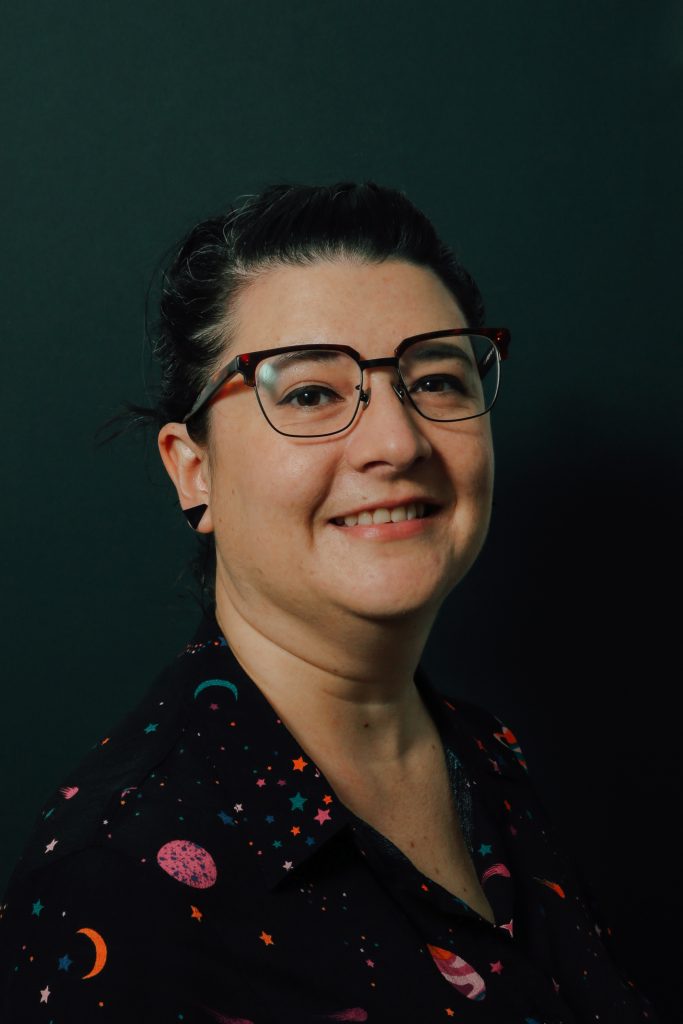
Suzannah Evans Furnass is a poet from Sheffield. She has published two pamphlets and two poetry collections. Her most recent publications are Space Baby (Nine Arches Press, 2022) and Green (Bad Betty, 2024). Her work combines climate anxiety and eco poetry with dark humour and irreverence. She has been a Royal Literary Fund fellow, a Gladstone’s Library Writer in Residence, and winner of two Northern Writers Awards.
£150.00
£150.00
£150.00
Please note: that you will always be required to provide proof of eligibility for our concessionary rates every time you book a course with us. Concessions do not apply to our one-to-one programme.
Students & Low Income – 20% off
If you’re a full or part-time student, or receive Jobseekers Allowance, Income Support, Working Tax Credit, Universal Credit, Council Tax Support, Pension Credit, or Housing Benefit, you are eligible for 20% off our standard course fee.
If you are of pensionable age and whose sole source of income is the state pension, and you are not currently claiming income support of any kind, then we encourage you to apply for a bursary (below).
Under 30 – 50% off
Anyone under 30 years of age is eligible for 50% off. Proof of age (passport, driver’s licence, ID card) is required.
Disabled & Carers – 50% off
Anyone in receipt of Carer’s Allowance, Personal Independence Payments, income-related ESA, Enhanced Universal Credit, Attendance Allowance or Disability Living Allowance is eligible for 50% off.
If you are currently an unpaid carer and not on the Carer’s Register or claiming Carer’s Allowance, we encourage you to apply for a bursary (below).
If you have a disability (for guidance, please see the 2010 Equality Act) but you do not or cannot claim disability benefits, we encourage you to apply for a bursary (below).
Summer
School 2027
This programme of half-day workshops has been curated in collaboration with the exhibition A Fine Day for Seeing at Southwark Park Galleries.