The here and now, or the there and then; what does it mean to be ‘contemporary’ in your poetry?
In this course we’ll explore what makes a text “contemporary”. Is it when it was written or how it engages with the historical, political, and philosophical questions of our time? How do contemporary writers reflect on or challenge the conditions in which they write?
This generative course explores innovative writing that moves across poetry, prose, translational work, and other forms. We will read writers who work with the ideas of genres, language, and authorship and their own writing in various forms questions of displacement, philosophy, and political resistance. We will work on the idea of translation in it’s expanded sense, as a creative and critical practice that can transform our relationship with languages. We consider how translation/mistranslation/non-translation/multilingualism and unfamiliar linguistic structures might open possibilities for thinking and writing.
At the same time, we will discuss the productive tension between understanding and not understanding; rather than treating linguistic opacity as an obstacle to overcome, we will consider how uncertainty and partial understanding are inseparable from our creative practice. How can we engage with a language or text without having a complete access to its meaning? Are we always in this position as readers of any text? And, most importantly, where do we draw the ethical boundaries between creative translation and cultural appropriation?
Throughout the course, we’ll engage with five assignments:
Along the way, we may encounter works by: Najwan Darwish, Susan Briante, Juana Adcock, Mia You, Chus Pato, Hajar Hossaini, Seyed Reza Mohammadi, Maggie O’Sullivan, Sacha Akhtar, Raquel Sales Rivera, Habib Tengour, Zhang Xiaoqoing, Norma Cole, Sina Queyras, Kaveh Bassiri, Shatr Collective, Carlos Soto Romàn, Antonio Ochao, Cathy Park Hong, Witold Wirpsza, among others. Through close reading of these works (some in source languages we might not have mastery of), we will discover ways of working with, against, and beyond the texts that inspire us.
5 fortnightly sessions over 10 weeks, starting 10 February 2027. Suitable for UK & International students.
10 Feb – Course start & Assignment 1 set
17 Feb – Assignment 1 submission
24 Feb – Assignment 1 feedback deadline & Assignment 2 set
3 Mar – Assignment 2 submission
10 Mar – Assignment 2 feedback deadline & Assignment 3 set
17 Mar – Assignment 3 submission
24 Mar – Assignment 3 feedback deadline & Assignment 4 set
31 Mar – Assignment 4 submission
7 Apr – Assignment 4 feedback deadline & Assignment 5 set
14 Apr – Assignment 5 submission
21 Apr – Assignment 5 feedback deadline & course end
To apply for a concession rate, please send relevant documentation showing your eligibility for one of our concessions to administration@poetryschool.com. Conditions of eligibility are detailed here. If you have any questions or wish to be added to the waiting list of a sold-out course, please email administration@poetryschool.com.
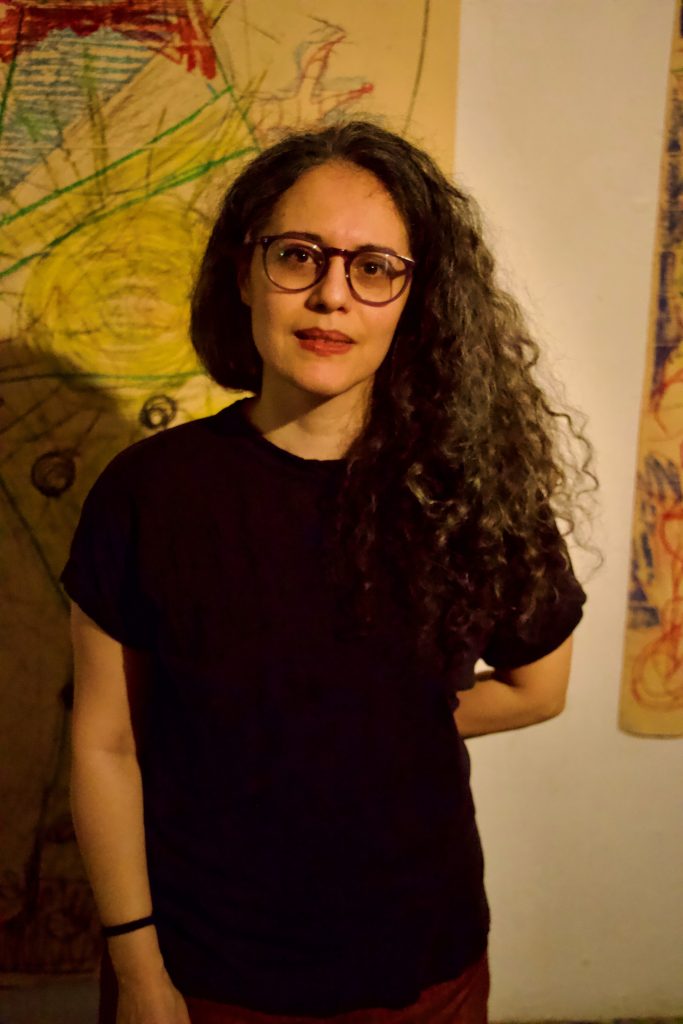
Ghazal Mosadeq is a poet, editor and translator. She is the founder of Pamenar Press, an independent publisher of poetry, translation, hybrid and critical writing. Her own work has been published by Ugly Duckling Presse, Tripwire, Sheirsman, Fence, Arc Poetry, Firmament, Asymptote, Modern Poetry In Translation, among others. She is a member of the editorial advisory board for the Journal of British and Irish Innovative Poetry.
£160.00
13 places left
£160.00
13 places left
£160.00
Please note: that you will always be required to provide proof of eligibility for our concessionary rates every time you book a course with us. Concessions do not apply to our one-to-one programme.
Students & Low Income – 20% off
If you’re a full or part-time student, or receive Jobseekers Allowance, Income Support, Working Tax Credit, Universal Credit, Council Tax Support, Pension Credit, or Housing Benefit, you are eligible for 20% off our standard course fee.
If you are of pensionable age and whose sole source of income is the state pension, and you are not currently claiming income support of any kind, then we encourage you to apply for a bursary (below).
Under 30 – 50% off
Anyone under 30 years of age is eligible for 50% off. Proof of age (passport, driver’s licence, ID card) is required.
Disabled & Carers – 50% off
Anyone in receipt of Carer’s Allowance, Personal Independence Payments, income-related ESA, Enhanced Universal Credit, Attendance Allowance or Disability Living Allowance is eligible for 50% off.
If you are currently an unpaid carer and not on the Carer’s Register or claiming Carer’s Allowance, we encourage you to apply for a bursary (below).
If you have a disability (for guidance, please see the 2010 Equality Act) but you do not or cannot claim disability benefits, we encourage you to apply for a bursary (below).
13 places left
Summer
School 2027
This programme of half-day workshops has been curated in collaboration with the exhibition A Fine Day for Seeing at Southwark Park Galleries.