Imagined Cities: Between Poetry & Architecture Masterclass
Create poems in response to the cities, buildings, and the structures we live in.
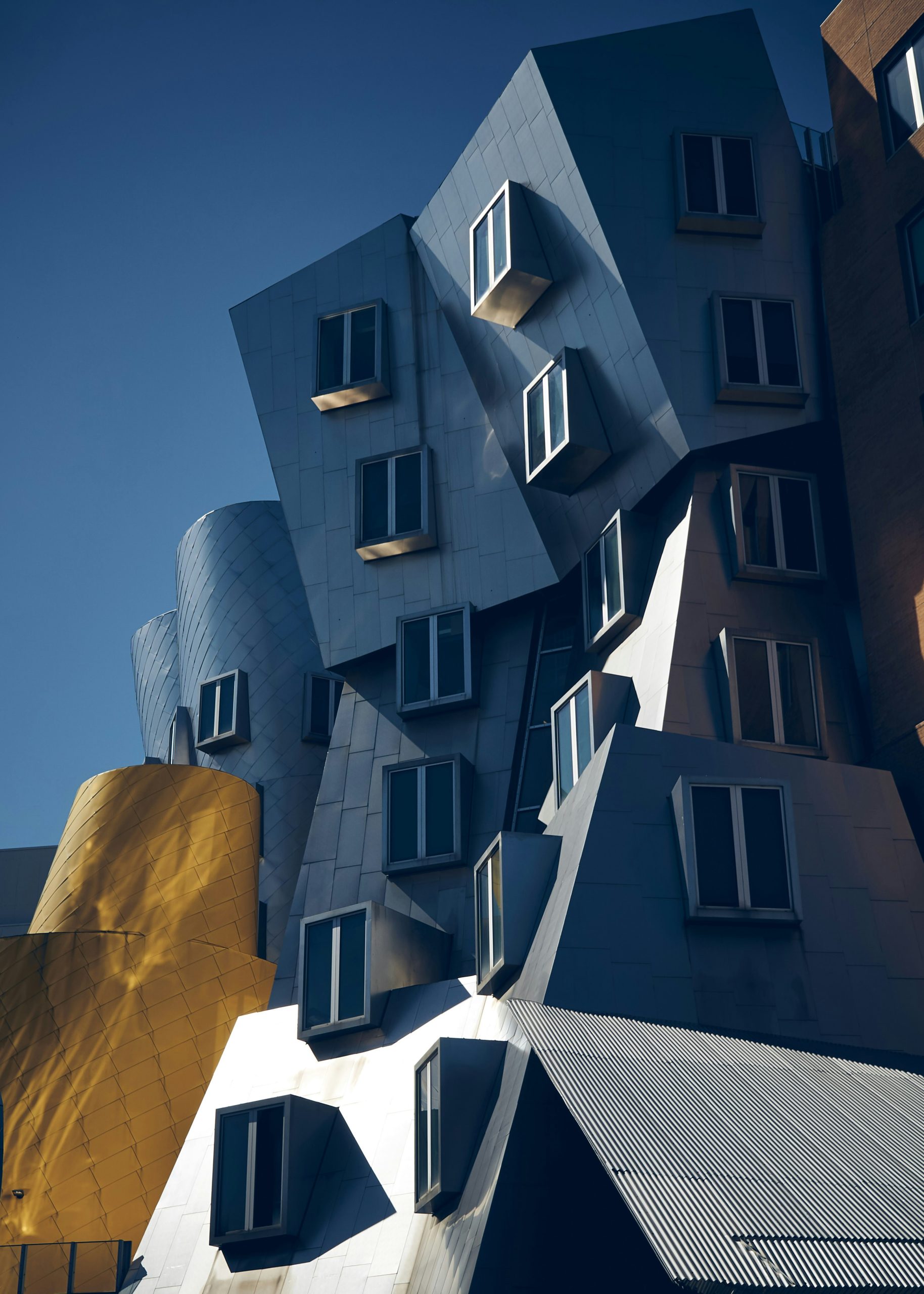
During the course, we will examine the field of architecture as subject and method and write poetry that engages with the physical as well as imagined aspects of architecture: the spaces we inhabit or dream into being. Participants will have access to various visual material while working on their poems: city maps, paintings and photographs of buildings, bridges, constructions and ruins, as well as pictures that capture the tensions between our private spaces and public arenas.
Each session will focus on our different relationships with the buildings and structures around us, exploring how to create a strong sense of place and vivid scenery in our poetry. Participants will be encouraged to create their own exciting urban or rural scenes in their writing: coastal cities, faraway and foreign towns, metropolises and imagined cities. We will experiment with writing about familiar cities as well as places we have never been to – realistic and surreal. What are the challenges of writing about a very familiar place? What can we discover by writing about a city we have never been to, or by inventing a completely fictional one?
In each session we will consider the relationships between the writer and the place. What can we achieve when writing about a place from the point of view of an outsider – a foreigner or a visitor – or from that of an insider, where the architecture of the place is almost inseparable from the writer’s self and vernacular? We will read poems that use the city as concept – as a symbol for something else: relationship, adventures, new beginnings, or loss – as well as poems that lead us from concrete physical places — buildings, bridges, alleys – into spaces of ideas and contemplations.
Writing about architecture is a wonderful way to explore the connection between buildings, memory, and our complex sense of time. We will consider writing about structures that evoke different eras: ruins, old buildings and new constructions. We will explore the different ways we can express specific moments in time by focusing on a single image: a broken door, a half-open skylight, the relic of a column. We will discuss how a very familiar building – a childhood home, an old school – can transform over time in our mind, and the way we can evoke this transformation in our poetry. We will consider the emotional connections we have towards various buildings – positive or negative – and the ways our memories change in relation to them.
Finally, we will pay particular attention to the way our use of language often evokes our deepest feelings about buildings and places. When does a house stop being a house and turn into a home? And what happens to the building we used to call home once we leave to a different place?
Masterclasses are 12-week courses that feature a much deeper consideration of technical craft and critical theory than our open-to-all courses. They use the same basic format as our ‘Forum’ courses, meaning they are text-based, with no live or video content, and run in a forum-style area on our Moodle. However, unlike our standard 10-week courses, Masterclasses are for advanced students only and fluency with poetic language and ideas will be assumed. These courses benefit from a small class size (12 maximum) and also feature a double assignment, where you will have 2 weeks to produce a long piece or sequence, followed by another 2 weeks to produce feedback on these extended pieces.
—
Stav Poleg is a writer, poetry editor and creative writing tutor based in Cambridge, UK. Her latest poetry collection, THE BANQUET (Carcanet 2025), written after Dante’s Convivio, was shortlisted for the PEN Heaney Prize 2025 and the Derek Walcott Prize for Poetry 2026. Her debut collection, THE CITY (Carcanet 2022) was shortlisted for the Seamus Heaney Poetry Prize for First Collection 2023. Both books were chosen for the Financial Times Best New Poetry features in their respective years.
Stav Poleg’s poetry has appeared on both sides of the Atlantic, in The New Yorker, Poetry Daily, Poetry London, Poetry Ireland Review, PN Review, and elsewhere. Her work is featured in leading anthologies, including A Century of Poetry in The New Yorker (Knopf, 2025), The Forward Book of Poetry (Faber, 2024), and New Poetries VIII (Carcanet, 2021). Her graphic-novel installation, ‘Dear Penelope: Variations on an August Morning’, created with artist Laura Gressani, was acquired by the Scottish National Gallery of Modern Art. Her theatre work was read at the Traverse Theatre, Edinburgh, and the Shunt Vaults, London, and most recently at Kettle’s Yard gallery, Cambridge. She serves on the editorial board of Magma Poetry magazine, and has co-edited recent issues on the themes of film, physics, and architecture. She teaches for the Poetry School on a range of subjects including poetry in response to the Divine Comedy, the Odyssey, the poetry of Rimbaud, and the cinema of Fellini.